October 13, 2026
Cold Drawn Aluminum Tubes: Specs, Performance and Industrial Applications
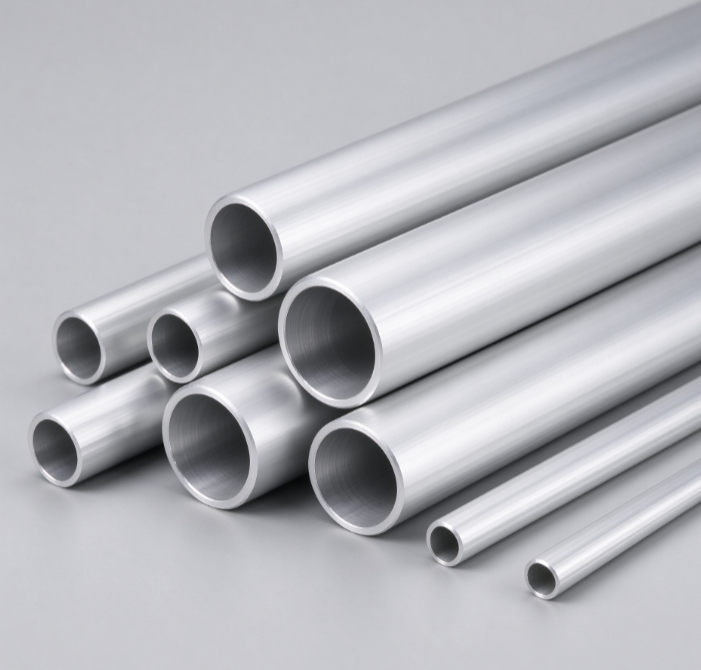
Table of Contents
1. Introduction
2. Core Technical Specifications
3. Cold Drawn vs Extruded Aluminum Tubes Performance Comparison
4. Key Advantages of Cold Drawn Aluminum Tubes
5. Common Alloy Types and Surface Finishes
6. Main Industrial Applications
7. Industry FAQs
Introduction
Cold drawn aluminum tubes are seamless aluminum tubular products. They undergo cold drawing processing based on pre-extruded aluminum tube blanks.
This cold working process reshape tube diameter and wall thickness at room temperature. It does not use high-temperature heating during final forming.
Cold drawing improves tube surface quality and dimensional accuracy a lot. These aluminum tubes meet strict precision standards for mechanical and aerospace components.
Core Technical Specifications
All standard cold drawn aluminum tubes follow ASTM B210 and EN 754 industrial standards. Fixed parameters guarantee stable batch quality.
Dimensional Tolerance Standards
Cold drawn aluminum tubes hold outer diameter tolerance within ±0.03mm. Wall thickness tolerance controls at ±0.02mm for precision grades.
Common tube sizes range from 3mm to 200mm outer diameter. Wall thickness covers 0.5mm to 10mm for general industrial use.
Basic Mechanical Parameters
Regular 6061-T6 cold drawn aluminum tubes have tensile strength around 310MPa. Yield strength reaches 276MPa under standard testing.
Elongation rate stays at 15% minimum. It ensures good bending and machining performance in secondary processing.
Cold Drawn vs Extruded Aluminum Tubes Performance Comparison
Cold drawing and extrusion are two mainstream aluminum tube forming methods. Their performance gaps decide different application scenarios. Below is verified industrial test data.
Performance Index | Cold Drawn Aluminum Tubes | Extruded Aluminum Tubes |
Dimensional Tolerance | ±0.02mm ~ ±0.03mm | ±0.10mm ~ ±0.20mm |
Surface Roughness (Ra) | ≤0.8μm | 1.6μm ~ 3.2μm |
Internal Stress Uniformity | High, no local deformation | Low, slight distortion risk |
Batch Consistency Rate | 99.5% | 93.2% |
Production Cost Level | Medium-High | Low |
Cold drawn aluminum tubes have far better precision and surface finish. The cold working process refines internal metal grain structure.
Extruded tubes fit low-precision large-batch projects. Cold drawn types suit high-precision assembly and pressure-bearing parts.
Key Advantages of Cold Drawn Aluminum Tubes
Ultra-High Dimensional Precision
Cold drawing process eliminates size deviation caused by high-temperature extrusion. Every tube keeps unified size standards.
It supports tight-fit assembly requirements for precision mechanical equipment.
Smooth and Flawless Surface
Room-temperature drawing removes surface pits and scratches. No oxidation layer on finished tube surface.
The smooth surface reduce friction resistance during mechanical operation. It extend component service life.
Stable Mechanical Strength
Cold forming process compact internal metal structure. Tube hardness and tensile strength get improved obviously.
Products not easy to deform under long-term pressure and vibration working conditions.
Common Alloy Types and Surface Finishes
Main Alloy Grades
6061 and 6063 are the most common grades for cold drawn aluminum tubes. They balance strength and machinability well.
3003 alloy tubes focus on corrosion resistance. 7075 high-strength alloy suits heavy-load aerospace parts.
Available Surface Treatments
Standard finishes include mill finish and polished finish. Anodized and powder coated finishes are for outdoor anti-corrosion use.
Different surface treatments expand application range in humid and corrosive environments.
Main Industrial Applications
Cold drawn aluminum tubes serve high-precision manufacturing fields mostly.
Aerospace industry uses these tubes for light structural parts and hydraulic pipeline components. High precision ensure flight system stability.
Automotive manufacturing applies them for brake pipelines and engine cooling tubes. Stable strength avoid pipeline rupture risks.
Precision machinery and instrument industry rely on smooth tube surface and tight tolerance. It support accurate equipment operation.
Hydraulic and pneumatic system fields adopt seamless cold drawn tubes. Zero leakage performance guarantees fluid transmission safety.
Industry FAQs
1. What is the biggest difference between cold drawn and extruded aluminum tubes?
Cold drawn aluminum tubes have higher dimensional precision and smoother surface. Extruded tubes have lower cost but larger size tolerance and worse surface finish.
2. Which alloy grade is most practical for general use?
6061-T6 cold drawn aluminum tubes are the best choice. It has balanced strength, corrosion resistance and processing adaptability for most industrial scenarios.
3. Do cold drawn aluminum tubes have seamless structure?
Yes. All standard cold drawn aluminum tubes are seamless products. No welding seam, no leakage risk for fluid pipeline applications.
4. What industrial standards do these tubes comply with?
Qualified products meet ASTM B210, EN 754 and ISO 6363 standards. They pass ISO 9001 quality certification for global industrial delivery.